
Adamson Contractors takes a less-is-more approach with its slurry application to offer farms a precision-led service that promotes slurry and digestate as an important fertiliser rather than a waste product.
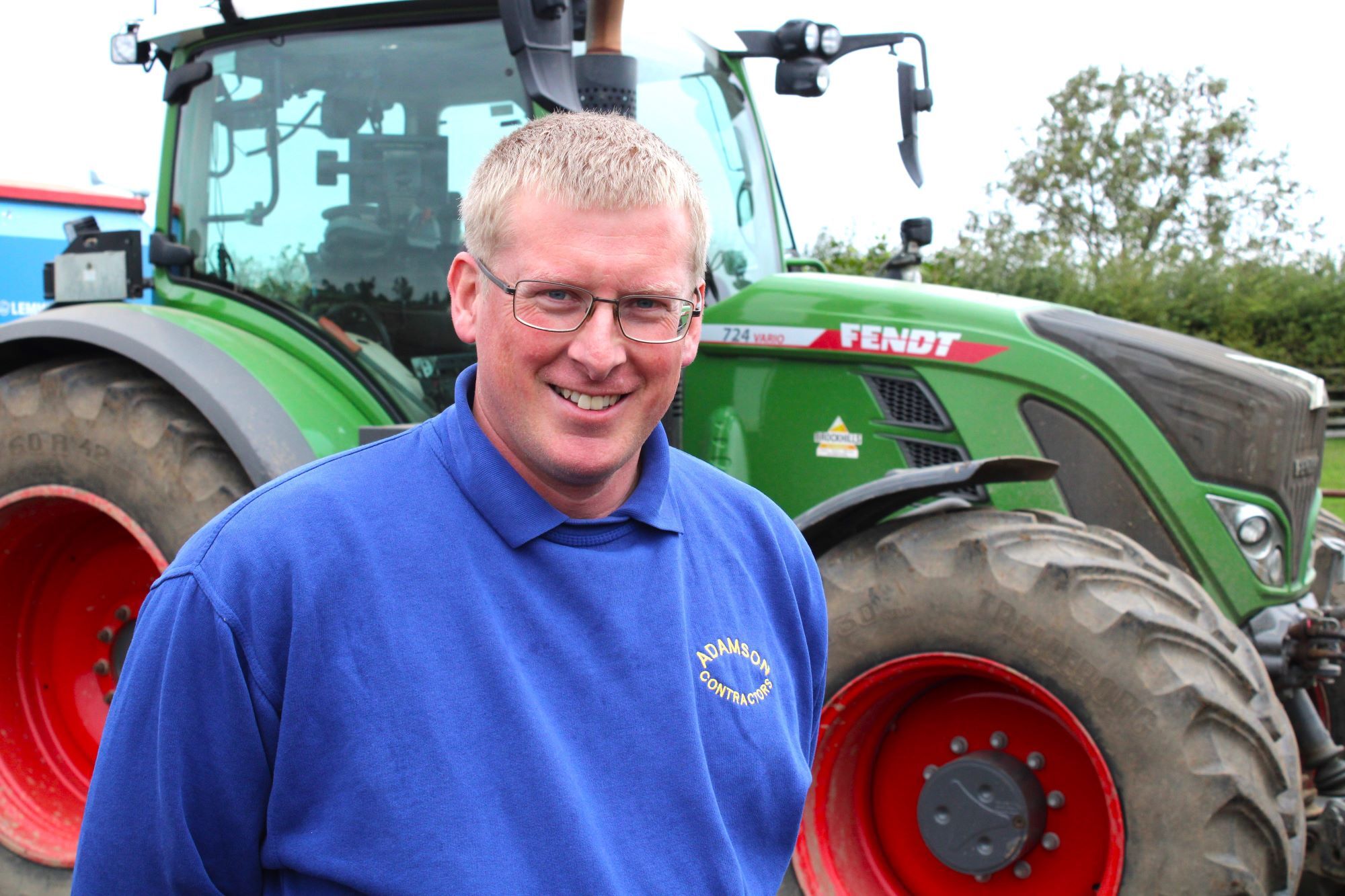
Third generation Martin Adamson started umbilical contracting in 2002. The business was established by his grandfather in 1953 to offer a range of agricultural services to farms in and around the business’s base near Northallerton.
“We run a fleet of 9 Fendt tractors, Vogelsang 24 metre dribble bars and Bunning muck spreaders to work in a 40-mile radius of our base. Up to 200,000 cubes of slurry and digestate is applied each year through our umbilical systems to both grass and arable crops,” says Martin.
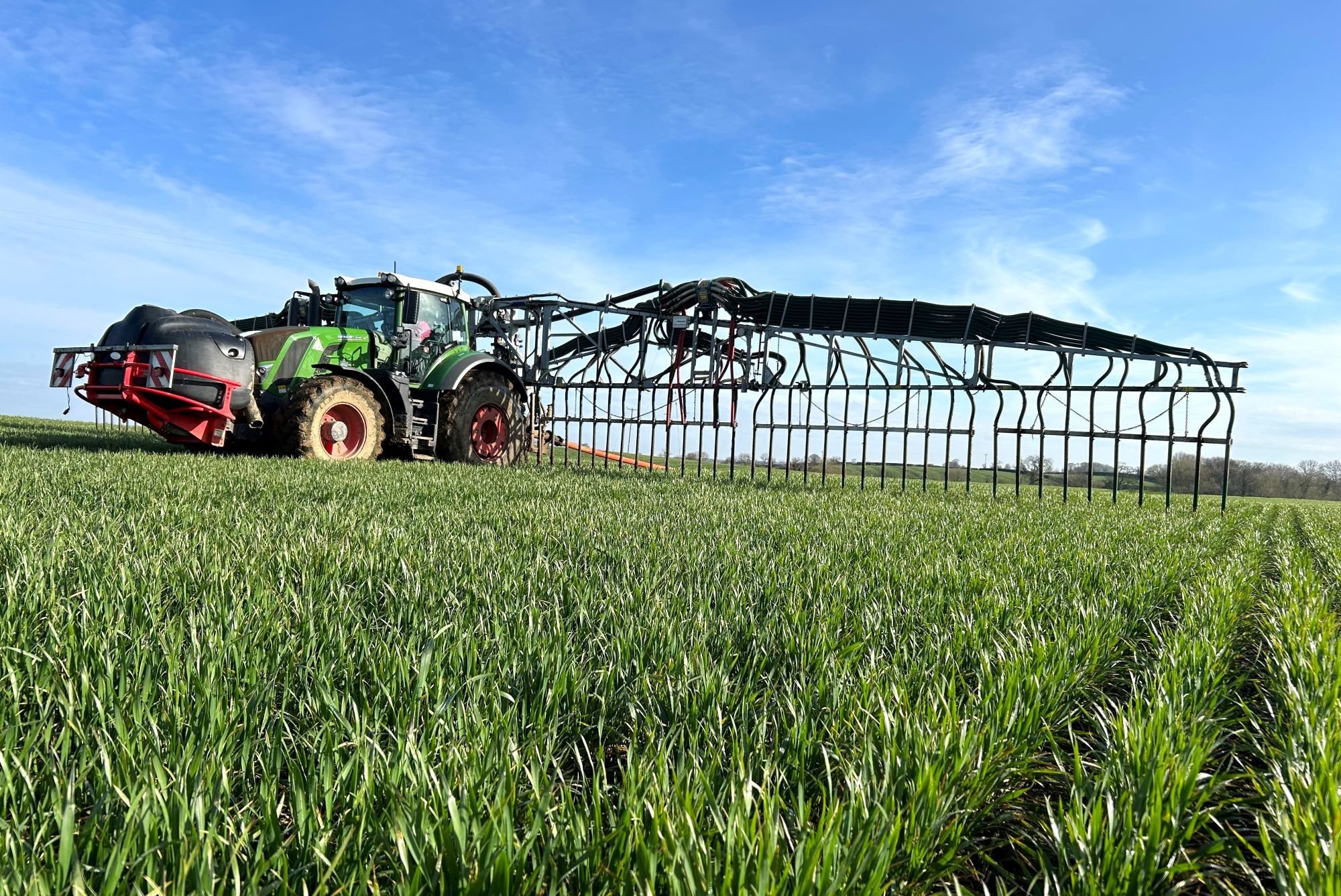
Two Vogelsang BackPacs do the bulk of the work
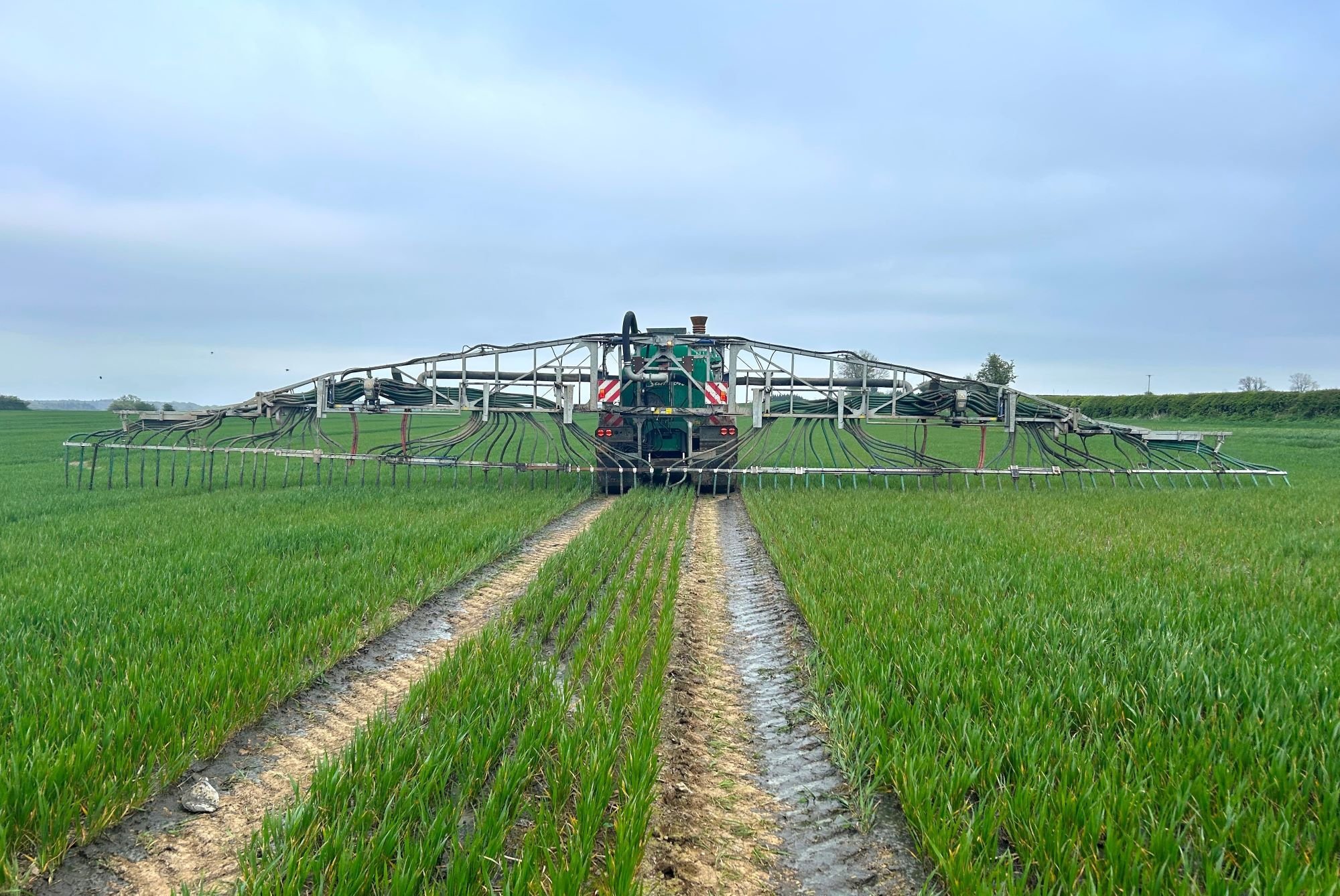
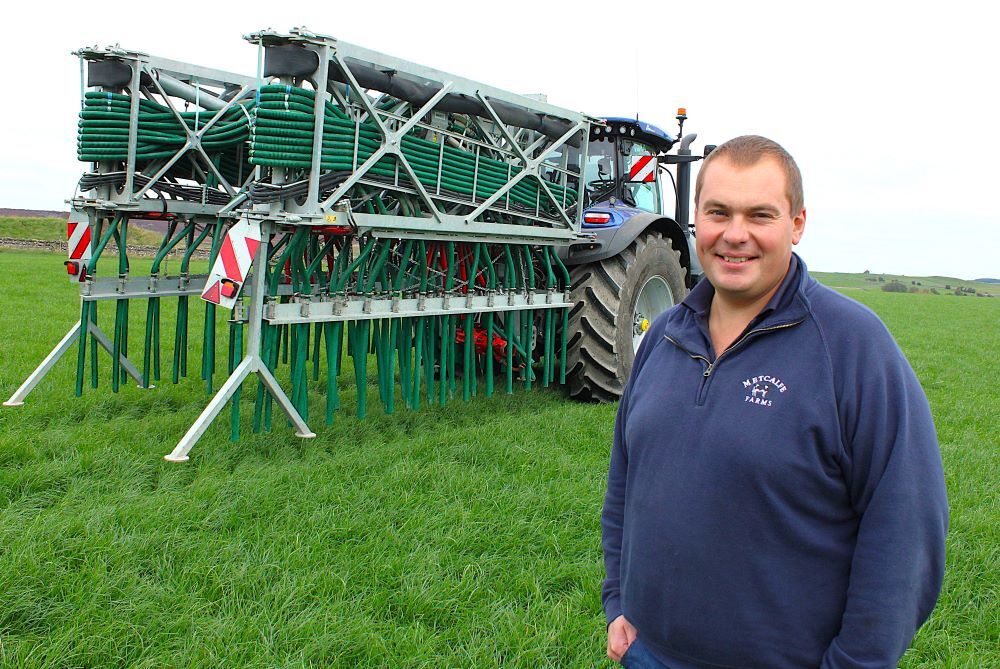
The fleet works predominately in 24 metre tramlines with Vogelsang BackPac dribble bar applicators using section control and auto shut off to split 36 metre tramlines by reducing the boom width to 18metres.
“We have two teams operating through spring with one mainly on tramline work and the other on grass and tramlines. We have two 12 metre applicators that are handy for grassland, but the bulk of the work is managed by the two Vogelsang BackPacs,” he says.
In the early days the business developed its own 24 metre dribble bar using an 18 metre Joskin applicator that was cut down to 12 metres and then extended to 24 metres.
“We ran our own system in the early days, and we were one of the first to use the Vogelsang 24 metre dribble bars. When we bought our first BackPac there were only about 10 in the country. We used it for many years before selling it to a customer who still runs it today,” he says.
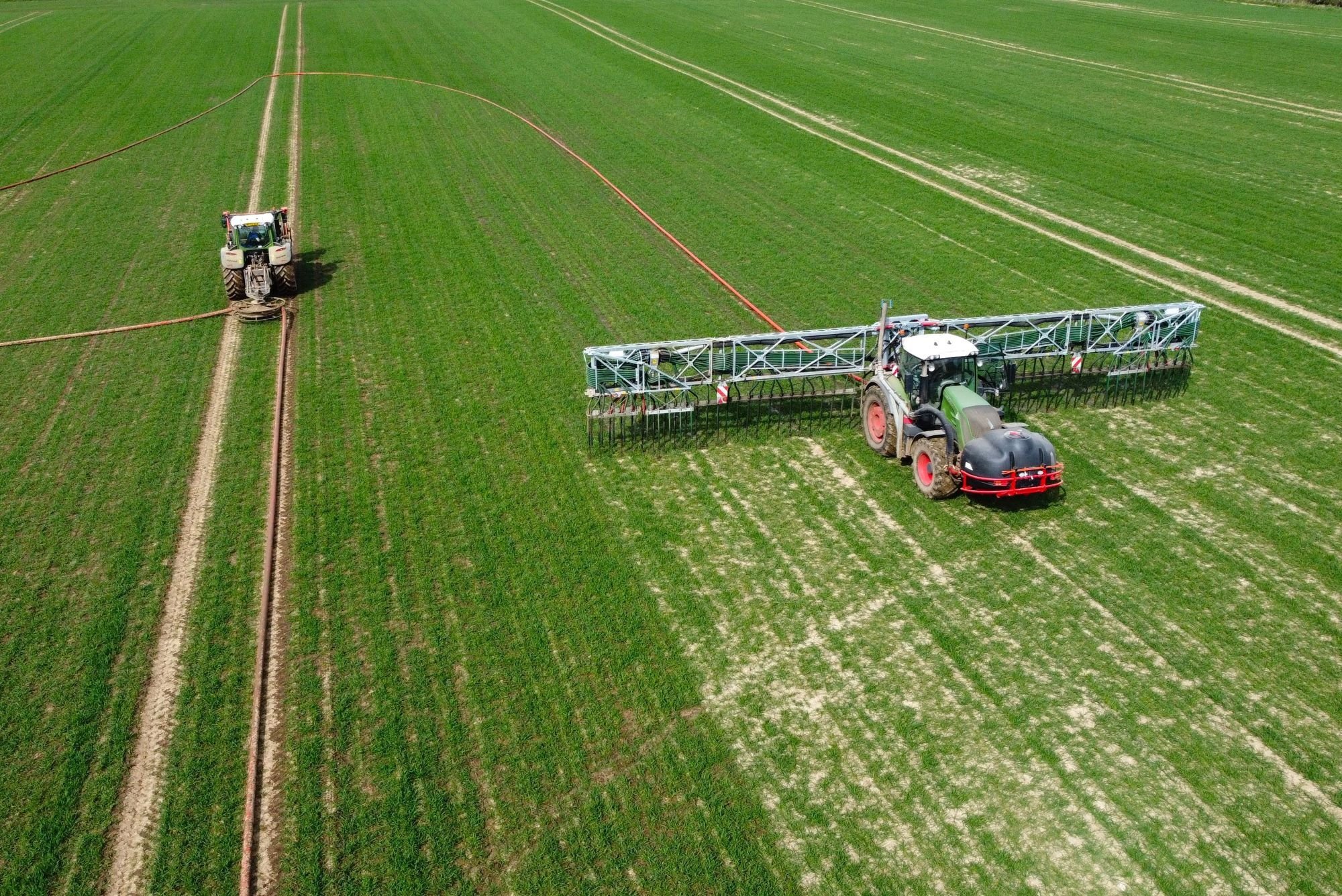
Relying on the quality of the dribble bars
The business bought the latest BackPac with Isobus which replaced the previous models that used Vogelsang control boxes.
“Having Isobus is much more user friendly, and the quality of the Vogelsang dribble bars is excellent,” he adds.
To offer greater accuracy and provide a service designed to make the most of slurry and digestate the business has fitted an NIR sensor and a flow meter to one of its tractors. Martin suggests that the days of just applying as much slurry as possible are long gone and he has embraced a less is more approach with his customers.
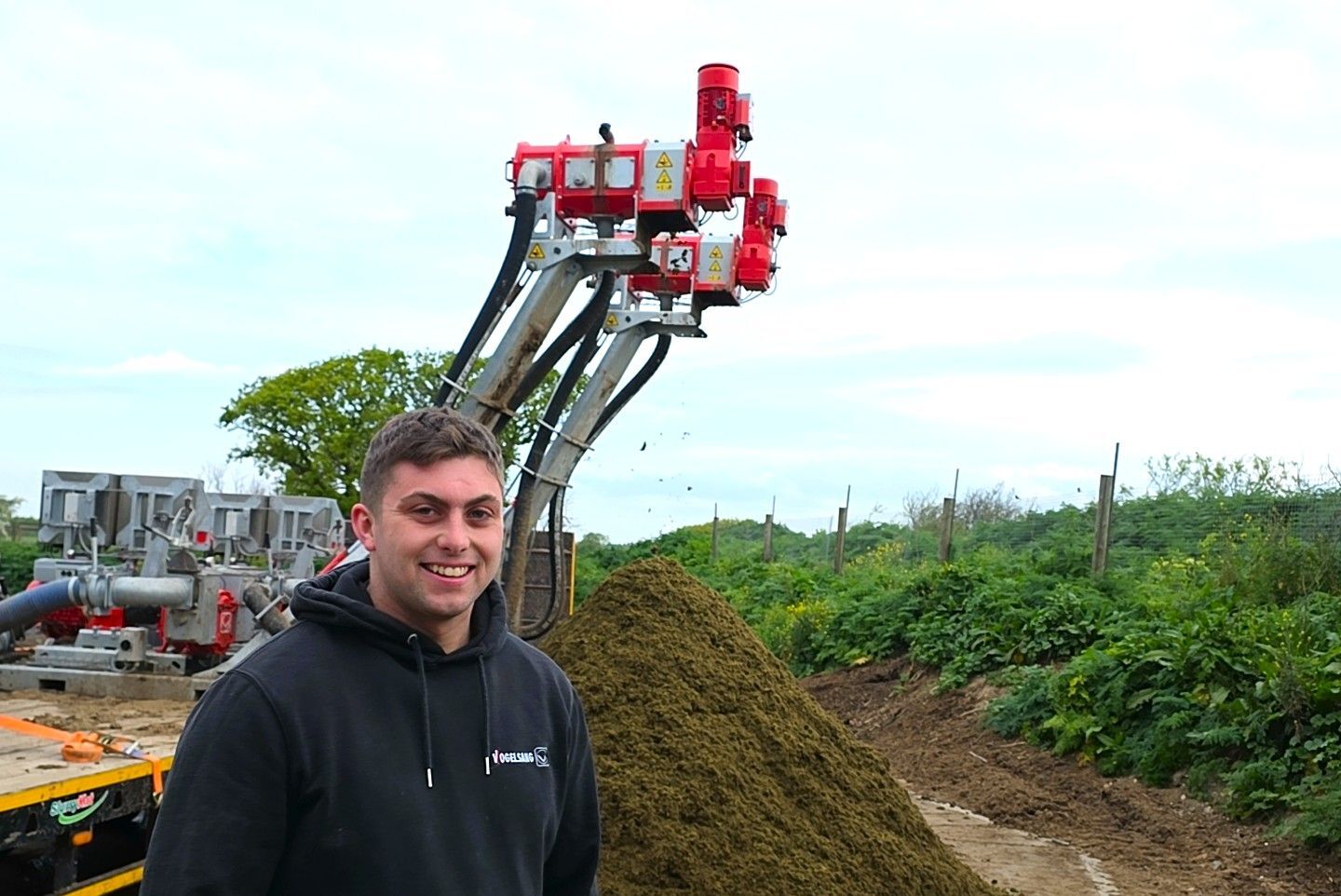
“Historically we would apply up to 5000 gallons an acre but now we apply around half that. We find the soil responds better to a smaller amount and we can cover a greater acreage for our customers. We also have some farms, mostly those rearing pigs, that have high P and K, so we have just purchased a separator to separate slurry enabling us to apply the liquid faction which is high in N and reserve the solid faction which is higher in P and K,” he says.
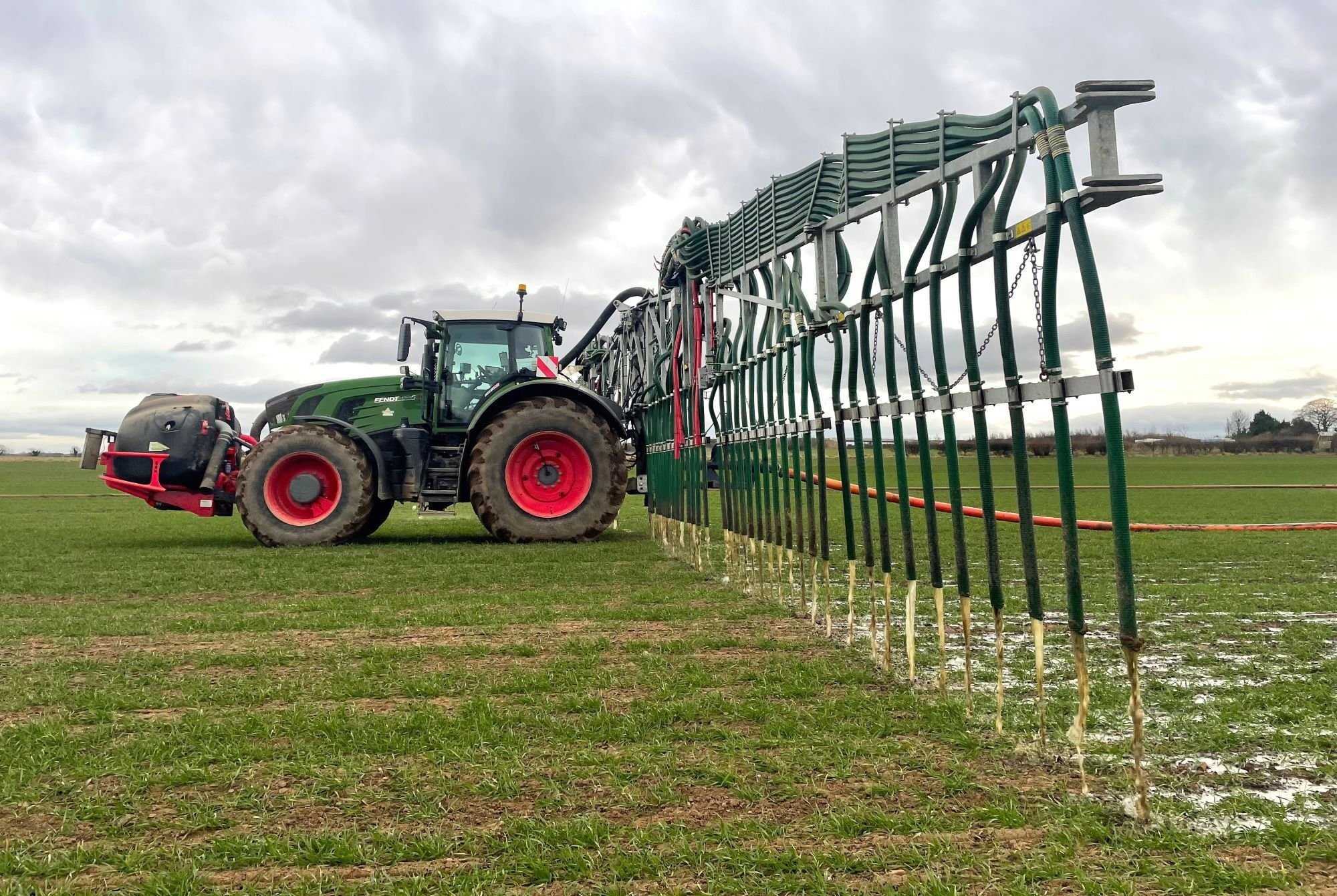
‘Slurry is applied more accurately than fertiliser’
To manage the flow and application rate the business uses 6-inch pipe for delivery and 5- or 4.5-inch pipe to reduce the flow rate to180-200 cubes per hour. A Schouten pump which combines a Vogelsang rotary lobe pump and a Doda centrifugal pump is used to boost the pressure which enables liquid to be pumped longer distances.
“I had a customer say that we apply slurry more accurately than he applies fertiliser. We use John Deere’s Harvest Lab NIR sensors and mapping technology from the tractors to offer customers an accurate picture of how much slurry has been applied, at what rate, and to which areas. This enables them to fill in areas around obstacles like trees with the same rate of application,” he says.
His team uses two Fendt 724 Gen 6 tractors and a Fendt 828. One of the724s carries two reelers and a hose humper, a second has the Schouten pump and compressor and a third has a front tank and the dribble bar system.
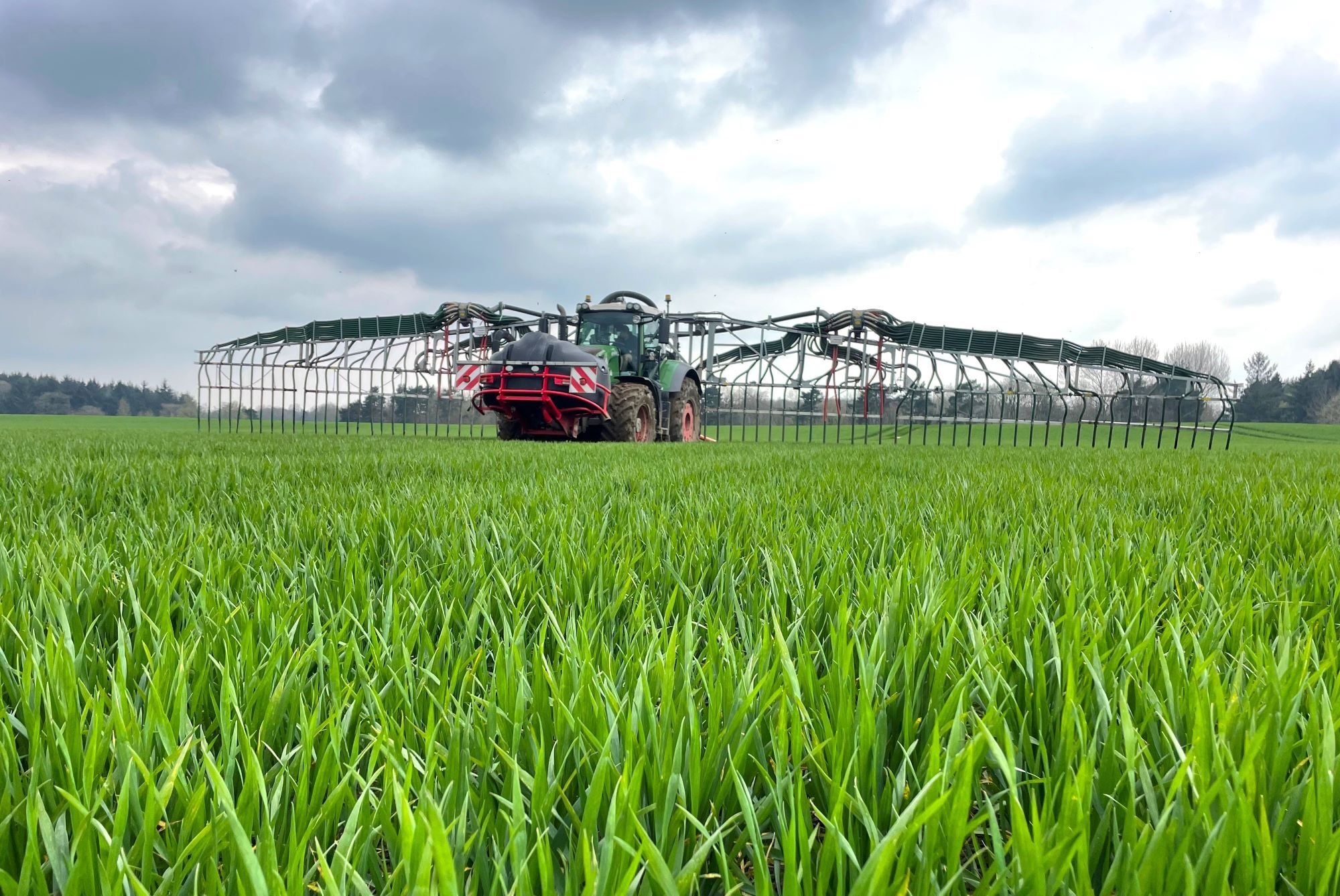
‘Slurry is not a waste product, and its value is being appreciated ever more’
“The tractor with the BackPac dribble bar has a front tank that slurry can be pumped to at headlands so that we don’t apply too much when turning. A pump then recirculates the slurry back to the dribble bar to empty the tank before the next headland turn,” he explains.
The front tank is another example of how precision is at the heart of how the business operates. Martin suggests that too much slurry might have been applied at the headland turn without the tank but that he has built a reputation on providing a more accurate service to his customers.
“Slurry is not a waste product, and its value is being appreciated ever more, especially with such high fertiliser prices. We have the technology and the machinery to make best use of it for our customers, and we will continue to find innovative ways of making the most of slurry for them,” he concludes.